
Status: Developing a Category of Analysis for the Early Global World
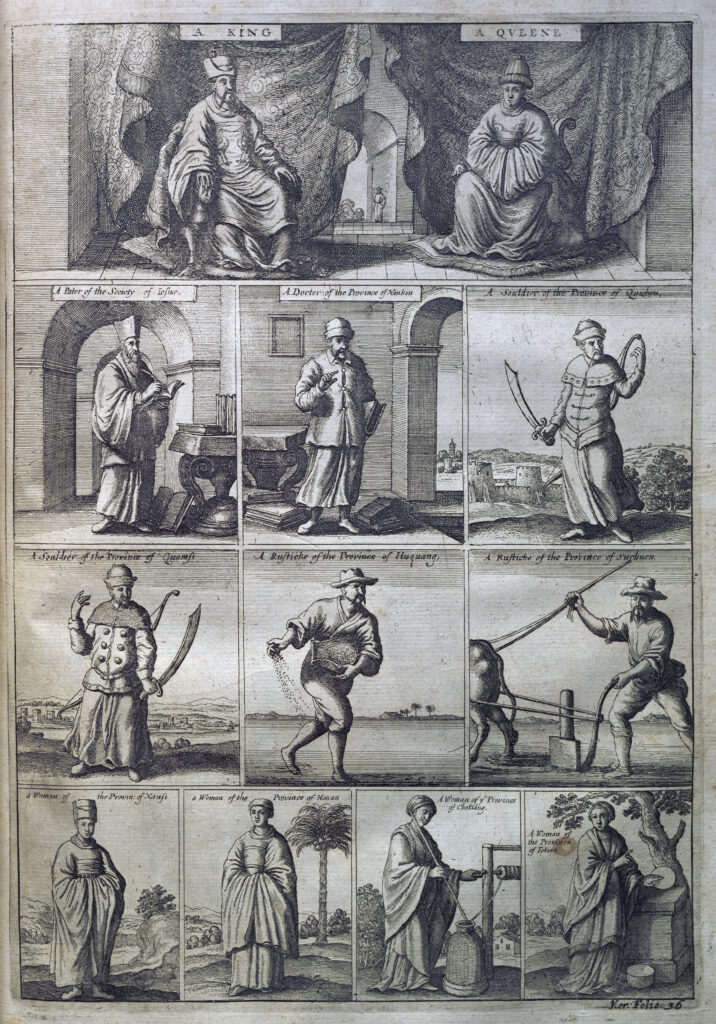
Everyone had their place in the pre-and early modern world. Korean Confucians knew that social order depended on “righting the names and correcting positions” (chŏng myŏngbun 正名分). In the Ottoman lands every thing and person had their own place (her şey yerli yerinde). Zhuangzi called it dao; the Bhagavad Gita called it dharma. Today, anglophone historians use the term ‘status’ to refer to this panoply of concepts.
Status determined the words you could utter: in languages such as Persian and Japanese, specific sets of verbs were assigned to speakers according to their relative rank and station. Status determined legal privileges, economic rights and occupational possibilities: a woman in fifteenth-century Florence could not inherit or bequeath her dowry, a Muslim captive in seventeenth-century Valencia could not be paid for his/her work, and a Jewish man in eighteenth-century Metz could not enter a craft guild. (Trivellato 2020, 196) Status determined the seating plan at a royal banquet, the standing plan of an imperial ceremony; courtiers, scribes, or eunuchs served as repositories of such politically sensitive knowledge. Status also determined the hierarchical position of sovereign polities in the premodern interstate order, whether within a Westphalian system (1648) or beyond in “universalist” empires such as the Ottoman, Safavid, and Qing. (Spruyt 2020) Agency was still possible in a world so thoroughly status-based and status-conscious. Thus, a beautiful slave who met a willing patron could become a freewoman or, even, queen; a marginalized community could negotiate their standing within a kingdom by providing a rare, but necessary, service; or a frontier vassal could simply go to war to annihilate the empire that once held it in thrall and subjugate its people in turn. In each of these cases, however, what changed was their position in a hierarchy, not the elimination of status altogether.
Seen through the lens of status, the pre- and early modern world was one where inequality was taken for granted, an unquestioned default, not a problem to be solved. When they felt wronged, premodern subjects across the status hierarchy appealed to justice to redress grievances and correct abuses. What they felt entitled to was justice, not equality. (Kim 2015)
In the nineteenth century, all this changed. Inequality began to be questioned– institutionally, fundamentally, and synchronously across many regions. In East Asia, Korean diplomats shuttling between Beijing and Seoul began to question unequal interstate relations, wondering how Korea should position itself in a world of sovereign equals. In the Ottoman Empire, the privileged status of Muslims over non-Muslims, and the privileges of tax-exempt officials over tax-paying commoners came under challenge, leaving local village chiefs uncertain of the loci of their authority. This new entitlement to equality found one of its most potent expressions in the Communist Manifesto, which was published as a pamphlet in 1848 in London and reached Paris and Germany in the following weeks; the International Workingmen’s Association was founded in 1864, also in London. As new notions of in/equality mobilized peoples all over, what justice meant also came to be contested. The ensuing monumental transformations have been studied through a multitude of lenses (industrialization, capitalism, liberalism, modernization, colonization, globalization etc), producing a crowded historiography.
Three important approaches ––liberalism, Marxism and Weberianism–– have been profoundly successful in articulating these transformations. On one hand, these vast literatures have deepened our understanding of how social hierarchies functioned, and how they changed. On the other hand, once mediated by these approaches, our understanding of status becomes a decontextualized abstraction, estranged from premodern cultures of presence where status (standing, Stand) could literally be a mundane, concrete position in a space, or be constituted by what one did as a vocation instead of what one had. (Stollberg-Rilinger 2015, 31; Paul 2019; on abstraction, Sartori 2006, 2014 etc; Sewell, Postone)
This workshop invites participants to develop status as a category of analysis for the pre-and early modern world by investigating categories of social practice that were current in this past. Interested participants should be prepared to share a specific, concrete case study from their area of research between the 3rd and 19th centuries (roughly 200 C.E. – 1800 C.E.) that sheds light on how societies ordered individuals and communities in different contexts. Examples include, but are not limited to, knowledge and inscriptional practices, ceremonial or ritual protocols, salary lists, status categories in premodern diplomacy, bureaucracy, or law. Works that connect the cultural, social, diplomatic, economic, and political are welcome and we especially encourage those working on regions outside of western Europe and the US to participate.
What are the stakes of understanding status in the early modern world? We argue that understanding status is key to understanding how pre- and early modern societies organized collective interdependence and coexistence. In turn, understanding premodern social orders may provide a generative foil to understanding the inequalities and injustices in our world today–all the while historicizing both concepts and bearing in mind that our expectations of what constitutes inequality and what constitutes an injustice did not always hold in the past. This project is the chronological converse of attempts to investigate the “birth of the modern world”, the “great” and “long” divergences, the “worldmaking” projects of internationalisms and anticolonial nationalisms, the “carbon democracies” and the origins and histories of capitalism. (Pomeranz 2000; Bayly 2004; Kuran 2010; Sewell 2010; Mitchell 2011; Hilt 2017; Getachew 2019 etc.) We turn our analytical gaze backwards instead, in the opposite chronological direction. We believe our findings can be brought to bear on these rich historiographies of the nineteenth, twentieth, and twenty-first centuries which have inspired our growth as scholars but also left us wondering about the older world these centuries had left behind.
References
Bayly, C. A. The Birth of the Modern World, 1780-1914 : Global Connections and Comparisons. Malden, Mass.: Blackwell, 2004.
Getachew, Adom. Worldmaking after Empire : The Rise and Fall of Self-Determination. Princeton: Princeton University Press, 2019.
Hilt, Eric. “Economic History, Historical Analysis, and the ‘New History of Capitalism.’” The Journal of Economic History 77, no. 2 (2017): 511–36.
Kim, Jisoo M. The Emotions of Justice: Gender, Status, and Legal Performance in ChosŏnKorea. Seattle: University of Washington Press, 2015.
Kuran, Timur. The Long Divergence: How Islamic Law Held Back the Middle East. Princeton, N.J.: Princeton University Press, 2011.
Mitchell, Timothy. Carbon Democracy: Political Power in the Age of Oil. Brooklyn: Verso, 2011.
Paul, Tawny. The Poverty of Disaster: Debt and Insecurity in Eighteenth-Century Britain. Cambridge: Cambridge University Press, 2019.
Pomeranz, Kenneth. The Great Divergence: China, Europe, and the Making of the Modern World Economy. The Princeton Economic History of the Western World. Princeton, N.J: Princeton University Press, 2000.
Sartori, Andrew. Liberalism in Empire: An Alternative History. Berkeley Series in British Studies ; Volume 8. Berkeley: University of California Press, 2014.
———. “The British Empire and Its Liberal Mission.” The Journal of Modern History 78, no. 3 (2006): 623–42.
Sewell Jr., William H. “Connecting Capitalism to the French Revolution: The Parisian Promenade and the Origins of Civic Equality in Eighteenth-Century France.” Critical Historical Studies 1, no. 1 (2014): 5–46.
Spruyt, Hendrik. The World Imagined : Collective Beliefs and Political Order in the Sinocentric, Islamic and Southeast Asian International Societies. Cambridge: Cambridge University Press, 2020.
Stollberg-Rilinger, Barbara. The Emperor’s Old Clothes : Constitutional History and the Symbolic Language of the Holy Roman Empire. Translated by Thomas Dunlap. New York: Berghahn Books, 2015.
Trivellato, Francesca. “The Moral Economies of Early Modern Europe.” Humanity: An International Journal of Human Rights, Humanitarianism, and Development 11, no. 2 (2020): 193–201.
